

Forget Virality. Build Authority.
You’re posting consistently on LinkedIn. You’re using hashtags. Yet, your content feels like it’s being whispered into a void. The engagement is sporadic, the follower growth is glacial, and the promised business results are nowhere to be seen. You’re not alone. Most professionals are stuck in this loop, mistaking activity for strategy.
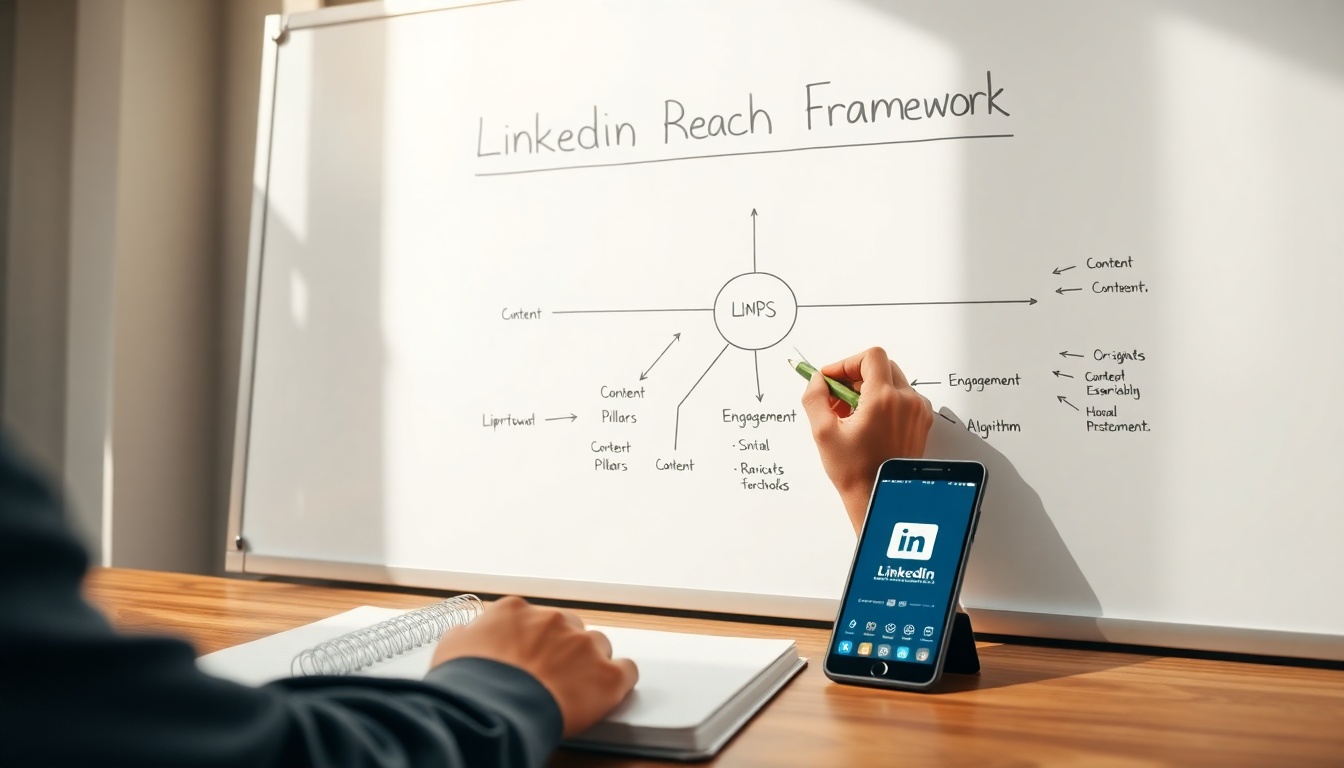
After 25 years in digital strategy, I’ve seen platforms rise and fall, but LinkedIn’s core value has only solidified: it’s the world’s most powerful B2B trust engine. Organic reach here isn’t about luck; it’s a predictable outcome of a deliberate system. This article isn’t another list of tips. It’s the exact LinkedIn Organic Reach Framework I use to build authority for myself and my clients.
The Core Problem: Why Your LinkedIn Strategy is Failing
The fundamental error is treating LinkedIn like a broadcast channel. You blast out content and hope it sticks. The algorithm, however, is designed to reward value exchange within a community. It prioritizes conversations, not announcements.
Most failures stem from three critical gaps: a lack of a defined audience avatar (you’re talking to everyone and no one), inconsistent content pillars (your profile is a confusing buffet), and zero engagement protocol (you post and ghost). You’re building on sand.
A founder client came to me frustrated. He was posting daily industry news, yet his leads were flat. We audited his profile: it was a resume. His content was generic. We implemented the Framework’s first step: the “Authority Bio.” We reframed his headline from “CEO of XYZ Tech” to “Helping SaaS founders reduce customer churn by 30% through data-led onboarding.” We defined one core audience. Within a month, his content reach doubled. Why? The algorithm finally understood who to show his content to, and that audience saw immediate, relevant value.
The LinkedIn Organic Reach Framework: A Four-Pillar System
This framework is operational. It turns your profile from a static business card into a dynamic, value-driven touchpoint that the algorithm loves to promote.
Pillar 1: Foundation & Profile Optimization (Your Digital HQ)
Your profile is not an “About Me” page; it’s a “How I Solve For You” page. Every element must be engineered for your target audience. Your headline and “About” section must state the problem you solve, for whom, and the outcome. Use keywords they search for.
Turn your “Featured” section into a portfolio of proof—case studies, keynote speeches, detailed articles. This isn’t vanity; it’s pre-framing credibility before a prospect even engages with your content.
Pillar 2: Strategic Content Architecture
Random posts create random results. You need three defined content pillars that align with your audience’s journey. For example: Pillar A (Awareness): Industry insights/trends. Pillar B (Consideration): How-to guides and problem-solving. Pillar C (Authority): Deep-dive case studies and results.
Plan this in a 4:1:1 weekly rhythm. Four pieces of pure value (Pillars A & B), one piece showcasing your work/ethos (Pillar C), and one direct engagement post (poll, question). This balance signals consistent, valuable output to the algorithm.
Pillar 3: The Engagement Engine (The 30-Minute Daily Protocol)
Organic reach is a two-way street. Dedicate 30 focused minutes daily, not to scrolling, but to strategic engagement. Visit the profiles of 5-10 ideal clients or influencers. Comment meaningfully on 3-5 posts in your feed—add a unique perspective, ask a thoughtful question.
Respond to every single comment on your own posts within the first hour. This initial burst of conversation is the strongest signal to LinkedIn that your content is worthy of amplification. This is where amateurs fail.
Pillar 4: Analysis & Iteration
Blind posting is a waste of time. Use LinkedIn Analytics religiously. Every two weeks, review: Which post had the highest share rate (not just likes)? Which topic sparked the most comments? What time did your audience engage most?
Double down on what works. Kill what doesn’t. This data-driven tweaking is what separates a sustainable strategy from a hopeful guess. Track follower growth of your target demographic, not just total numbers.
“LinkedIn’s algorithm doesn’t reward posters; it rewards community builders. Your organic reach is directly proportional to the value of the conversations you ignite. Stop broadcasting and start connecting.”
— Abdul Vasi, Digital Strategist
Amateur vs. Pro: The Mindset & Action Gap
| Activity | Amateur Approach | Pro Framework Approach |
|---|---|---|
| Profile | Treats it as an online resume. Headline is just a job title. | Engineers it as a conversion page. Headline states value proposition. |
| Content | Posts randomly about company news or personal musings. | Follows a 4:1:1 rhythm based on three strategic content pillars. |
| Engagement | Posts and disappears. Comments are “Great post!” or emojis. | Dedicates 30 mins daily to strategic comments and conversation. |
| Measurement | Checks vanity metrics (likes, follower count). | Analyzes share rate, comment quality, and audience growth for iteration. |
| Goal | To be seen and go viral. | To build authority and generate qualified conversations. |
LinkedIn Organic Reach Framework: FAQ
1. How long does it take to see results with this framework?
You will see a noticeable shift in engagement quality within 4-6 weeks if you execute consistently. Meaningful lead generation and authority positioning typically solidify between 3-6 months. This is a marathon, not a sprint.
2. Should I use all 30 hashtags LinkedIn allows?
Absolutely not. This is a common mistake. Use 3-5 highly relevant, specific hashtags. Mix one broad (e.g., #Marketing), one niche (e.g., #B2BContentStrategy), and one community-focused (e.g., #MarketingTwitter). Quality over quantity.
3. Is video content essential for reach?
While native video often gets a slight boost, compelling text-based carousels and documents perform exceptionally well for deep-value B2B audiences. Focus on the value of the content, not just the format. A weak video is worse than a strong text post.
4. How do I handle negative or spam comments?
Delete obvious spam immediately. For constructive criticism, engage professionally—it shows confidence and can deepen the conversation. For pure trolls, hide or delete. Your comments section is your community; curate it.
5. Can I automate any part of this framework?
You can schedule posts (using LinkedIn’s native scheduler or a trusted tool). You cannot automate engagement. Automated comments or connection requests will damage your reputation and reach. The “human in the loop” is non-negotiable.
Conclusion: Building Your Legacy, One Connection at a Time
The LinkedIn Organic Reach Framework is not a hack. It’s the antithesis of short-term thinking. It’s a commitment to building a professional legacy based on genuine expertise and meaningful connections. In a noisy digital world, this systematic approach cuts through.
It transforms LinkedIn from a source of anxiety into your most predictable channel for trust and growth. Stop chasing the algorithm. Start building a community around your expertise. The reach will follow as a natural consequence.
