

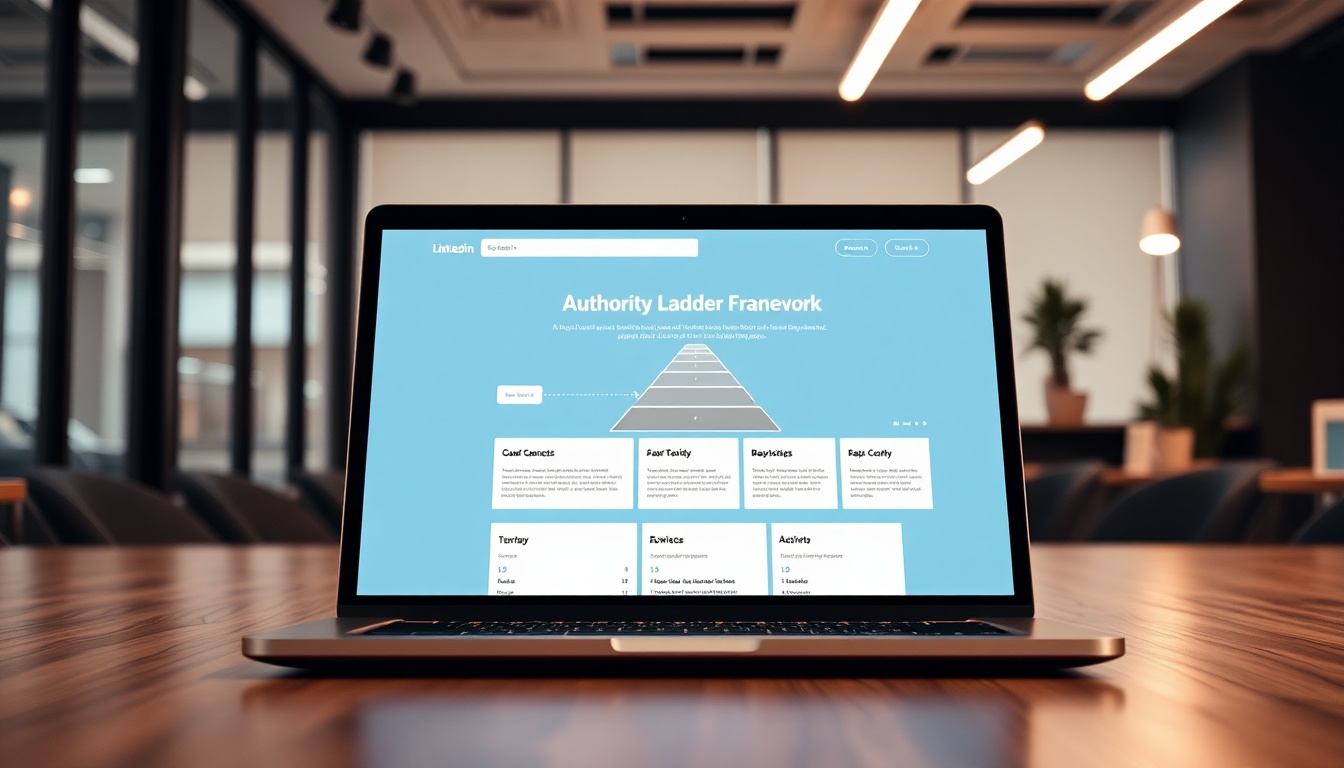
You’re posting. You’re connecting. You’re even using hashtags. Yet, your LinkedIn profile feels like a ghost town while competitors land deals from their DMs. The platform is saturated with noise, and shouting louder isn’t the answer. The real game is played on a different field: structured authority.
The Core Problem: Random Acts of Content
Most professionals fail on LinkedIn because they operate without a strategic hierarchy. They treat every post, comment, and connection as an isolated event. This scattershot approach yields random, unpredictable results. You might get a few likes, but you build zero momentum. You’re not climbing a ladder; you’re jumping on a trampoline—lots of effort, but you end up right where you started.
The absence of a framework means you confuse activity with achievement. Commenting on a post one day and sharing a company brochure the next sends conflicting signals to the algorithm and, more importantly, to your audience. You remain a commodity, not a coveted authority.
A Lesson from the Trenches
I once coached a brilliant SaaS founder who was posting insightful tech threads daily. His engagement was decent, but his inbound lead quality was poor. We audited his activity and found the flaw: he was stuck on the first rung. His content was purely educational, establishing basic competence but not advanced trust. He was the “helpful techie,” not the “visionary leader.” We restructured his calendar using the Authority Ladder. Within 90 days, his content began attracting C-level conversations, and a single post sparked a dialogue that led to a six-figure pilot project. The content didn’t change; its strategic intent did.
The LinkedIn Authority Ladder Framework: A 4-Rung Strategy
This framework is a non-linear progression. You must consistently operate across all rungs to build a complete profile of trust. Think of it as constructing a building floor by floor, while ensuring each floor is fully furnished and operational.
Rung 1: Foundation & Visibility
This is your baseline credibility. Your profile is your digital handshake. It must be client-focused, not a resume. Use a professional headshot, a value-driven headline, and a summary that speaks to the problems you solve. Action here: Audit your profile. Does every line answer “So what?” for your ideal client?
Rung 2: Value & Engagement
You now provide consistent, free value. This is where most “content creators” live. Share insights, quick tips, industry commentary, and engage meaningfully in comments. The goal is to become a reliable resource. Action: Commit to a “Value-Comment” ratio—for every self-promotional post, publish five that purely educate or assist your network.
Rung 3: Trust & Community
This is the differentiator. You move from broad value to building deeper connections. Host LinkedIn Audio Events, run thoughtful polls, create content that shares lessons from failures, and engage in direct, value-added conversations in DMs. You’re not just broadcasting; you’re facilitating a community. Action: Identify 10 key prospects and engage with their content with thoughtful commentary for 21 days straight.
Rung 4: Authority & Influence
You are now the reference point. You publish bold perspectives, not just observations. You create flagship content like whitepapers or case studies, get featured in publications, and your network seeks your opinion. Deals come to you. Action: Write one “signature piece” per quarter that challenges conventional wisdom in your niche and share it strategically.
“Authority on LinkedIn isn’t granted by your title; it’s systematically constructed. The LinkedIn Authority Ladder Framework isn’t about going viral—it’s about becoming vital. It transforms your profile from a digital business card into a strategic asset that works while you sleep.”
— Abdul Vasi, Digital Strategist
Amateur vs. Pro: The Mindset Divide
| The Amateur Approach | The Pro Strategy (Using the Ladder) |
|---|---|
| Posts sporadically, mostly company news. | Follows a 4-rung content calendar mixing value, trust, and authority pieces. |
| Connects with anyone to grow network size. | Strategically connects and immediately adds value via DM (Rung 3). |
| Profile is an online CV listing past jobs. | Profile is a client-centric “solutions page” (Rung 1 foundation). |
| Seeks immediate leads from every post. | Focuses on relationship velocity, knowing leads are a byproduct of authority. |
| Engages only when tagged or mentioned. | Proactively builds community by engaging on target accounts’ content daily. |
Frequently Asked Questions
1. How long does it take to see results with this framework?
You can improve your foundation (Rung 1) in a week. Building visible authority (Rung 4) is a 6-12 month commitment. Consistent execution across all rungs typically yields tangible opportunities (quality leads, invites) within 90 days.
2. Do I need to post every day?
No. Consistency beats frequency. It’s better to post 3 high-intent, ladder-aligned posts per week than 7 random ones. Focus on the strategic layer of each piece, not just the volume.
3. Can I skip rungs?
Absolutely not. You cannot build influence (Rung 4) on a weak profile (Rung 1) or without being a trusted community member (Rung 3). Each rung supports the one above it. Skipping creates instability.
4. Is this only for founders and CEOs?
This framework works for any professional selling expertise—consultants, sales leaders, freelancers, aspiring executives. Authority is the universal currency of business development.
5. How do I measure progress?
Move beyond vanity metrics. Track: Quality of inbound DMs, profile view trends from target companies, engagement from senior-level connections, and direct invitations to speak or collaborate. These are your true KPIs.
Conclusion: Stop Posting, Start Building
The LinkedIn Authority Ladder Framework is your antidote to digital busywork. It replaces hope with a blueprint. Success on the platform isn’t an accident; it’s the direct output of a deliberate, multi-layered strategy.
Your task now is not to consume more content, but to audit your current position. On which rung do you spend 80% of your time? The gap between where you are and where you need to be is bridged not by working harder, but by working smarter on the right sequence. Start building your ladder today.
