

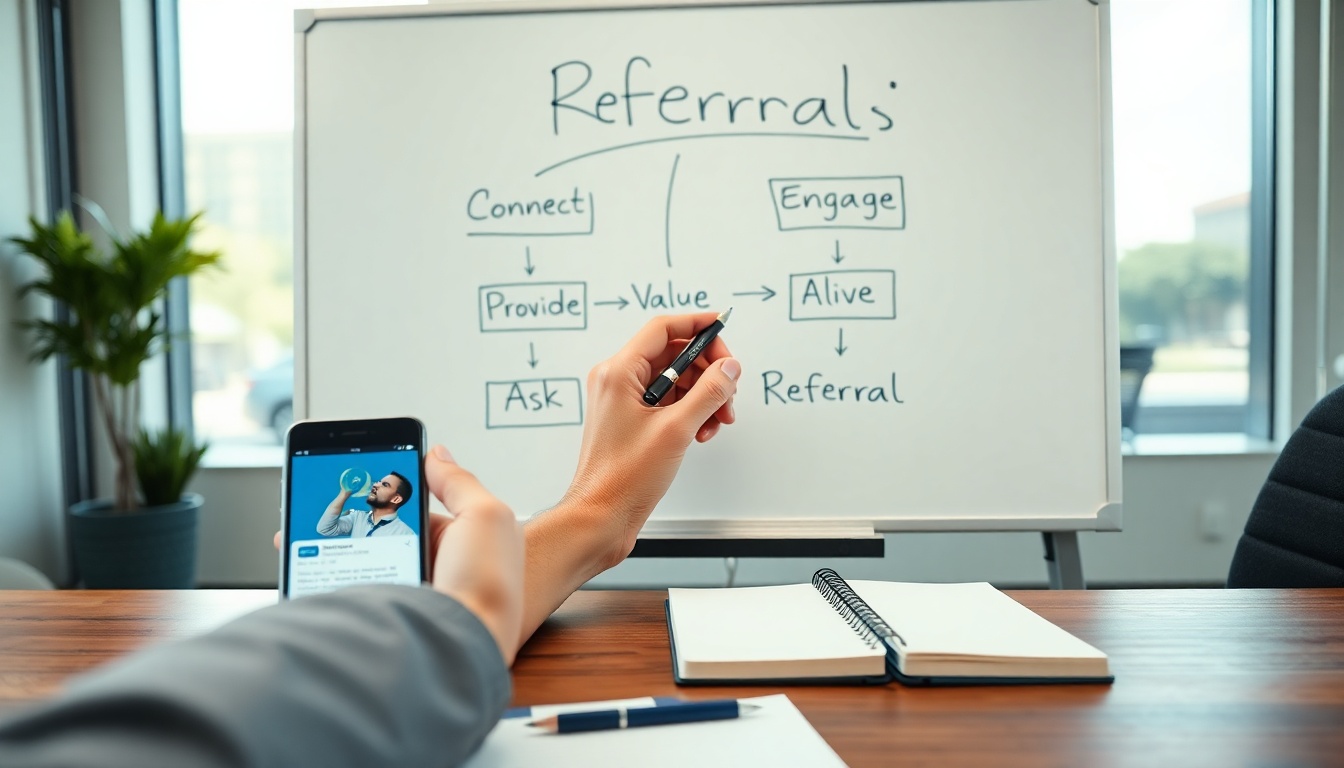
The Silent Referral Goldmine You’re Ignoring
Your LinkedIn feed is a firehose of content, but the real treasure isn’t in the posts. It’s in the connections. Most professionals treat LinkedIn as a digital Rolodex or a content broadcasting channel. They’re missing the point entirely. The platform’s true power lies in its ability to systematically generate high-trust, high-intent referrals that close faster and at higher rates.
For 25 years, I’ve watched businesses chase cold leads while a warm network of advocates sits untapped. A referral isn’t just another lead; it’s a pre-qualified opportunity with built-in social proof. It’s the difference between a cold call and a warm introduction. This isn’t about luck or having a large network. It’s about a repeatable, scalable framework.
Why Your “Networking” Isn’t Working
The problem isn’t a lack of effort. It’s a flawed approach. Amateurs connect and immediately pitch. They treat their network as a transactional resource to be mined. This burns bridges and yields nothing. The failure stems from three critical errors: a complete absence of a system, a focus on quantity over relationship quality, and asking for the referral at the wrong time, in the wrong way.
Without a framework, your outreach is random and forgettable. You’re hoping for serendipity instead of engineering outcomes. You collect connections like trophies but never convert those connections into capital. This scattershot method drains time and produces inconsistent, unreliable results. It feels like networking, but it’s just busywork.
I once consulted for a SaaS founder with 5,000+ LinkedIn connections. He was frustrated. “Abdul, I’m connected to everyone, but no one refers me!” I asked him to scroll through his connections and tell me the last meaningful interaction he had with any of them. He scrolled in silence for two minutes. The last interaction for over 90% was the automated “I’d like to add you to my network” message from years ago. His network was a graveyard, not an engine. We didn’t need more connections; we needed to resurrect and activate the ones he already had.
The 4-Step LinkedIn Referral Generation Framework
This is a pragmatic system, not theory. It requires discipline, but it turns your profile from a static resume into a dynamic referral hub.
Step 1: Strategic Connection & Audit
Stop connecting with everyone. Start with a hyper-targeted list: past clients, colleagues, vendors, and industry peers who truly know your work. Audit your existing network. Use LinkedIn’s tagging feature to categorize them: Clients, Partners, Influencers, etc. Your goal is a manageable, quality list of 150-200 core advocates, not 5,000 strangers.
Step 2: Consistent, Value-First Engagement
This is where most fail. Engagement is not liking a post. It’s adding thoughtful commentary. It’s sharing their content with your insight. It’s sending a direct message referencing a specific achievement or article they shared. Schedule 20 minutes daily for this. The rule: provide value three times before you even think about asking for anything. Become a recognizable, helpful voice in their feed.
Step 3: The Direct, Personalized Ask
When you’ve built a foundation, asking becomes natural. Do it privately via message. Be specific. Wrong: “Let me know if you know anyone.” Right: “I’m currently helping e-commerce founders improve conversion rates. Given your network, do you know 1-2 people who are scaling past $50K/month and might be facing cart abandonment issues? A brief intro would mean a lot.” You’ve made it easy, specific, and low-risk for them.
Step 4: The Systemized Follow-Through
Track every ask in a simple spreadsheet: Who you asked, the date, their response. If they make an introduction, thank them immediately and keep them updated on the outcome (with permission). If they can’t think of anyone now, schedule a follow-up in your CRM for 60-90 days. The referral process is a cycle, not a one-off event. Nurture your advocates relentlessly.
“A referral is not an accident. It’s the direct result of a deposited social capital. LinkedIn is the ledger. Your framework is the investment strategy. Stop begging for business and start engineering trust.”
— Abdul Vasi, Digital Strategist
Amateur Tactics vs. The Pro Framework
| Activity | The Amateur Approach | The Pro Framework |
|---|---|---|
| Network Building | Connects with anyone. Focuses on hitting 500+ connections. | Strategically connects with and audits a core group of 150-200 potential advocates. |
| Engagement | Random likes. Sends generic “Congrats!” messages. | Dedicated daily time for adding thoughtful comments and personalized DMs that provide value. |
| The Ask | “Let me know if you know anyone looking for my services.” Vague and burdensome. | “Do you know 1-2 [specific title] at [specific company type] facing [specific problem]?” Easy and specific. |
| Tracking | Relies on memory. Follow-ups are sporadic and forgotten. | Uses a simple CRM or spreadsheet to track asks, responses, and schedule nurturing follow-ups. |
| Mindset | Transactional. Network is a resource to extract value from. | Relational. Network is a community to invest in and add value to consistently. |
Your LinkedIn Referral Framework FAQs
1. How much time does this require daily?
For maintenance, 20-30 minutes is sufficient. For initial setup and reactivating a dormant network, block 2-3 hours. Consistency beats intensity. A small daily investment compounds dramatically.
2. What if I’m introverted and hate “networking”?
This framework is perfect for you. It’s systematic, not schmoozy. It replaces forced small talk with structured, value-based communication. You’re not networking; you’re managing a key business process.
3. How specific should my “ask” be?
Extremely specific. The more specific you are, the easier it is for your connection to mentally scan their Rolodex. “Tech founders” is bad. “B2B SaaS founders in the HR tech space, series A funded, with 20-50 employees” is good.
4. What do I do if someone says “No” or doesn’t respond?
Thank them for their time and continue providing value as if nothing happened. No pressure. A “no” now isn’t a “no” forever. The goal is to stay top-of-mind as a valuable professional, not a pitch machine.
5. Can this work for any industry?
Absolutely. The principles of trust, value, and specific communication are universal. The application—the type of content you engage with, the specifics of your ask—will vary, but the engine runs the same.
From Scrolling to Scaling: Your Next Move
LinkedIn is not a social media platform for your business; it’s a referral generation platform disguised as one. The difference between those who see it as a time sink and those who see it as their most reliable lead source is a framework. It’s the shift from hoping to knowing, from random activity to predictable results.
Stop broadcasting into the void. Start building your engine. Audit your network today. Choose 10 people. Engage with them meaningfully this week. The compound interest on these relationships will far outweigh any single cold outreach campaign you’ll ever run. Your next major client is likely one referral away from someone already in your network.
